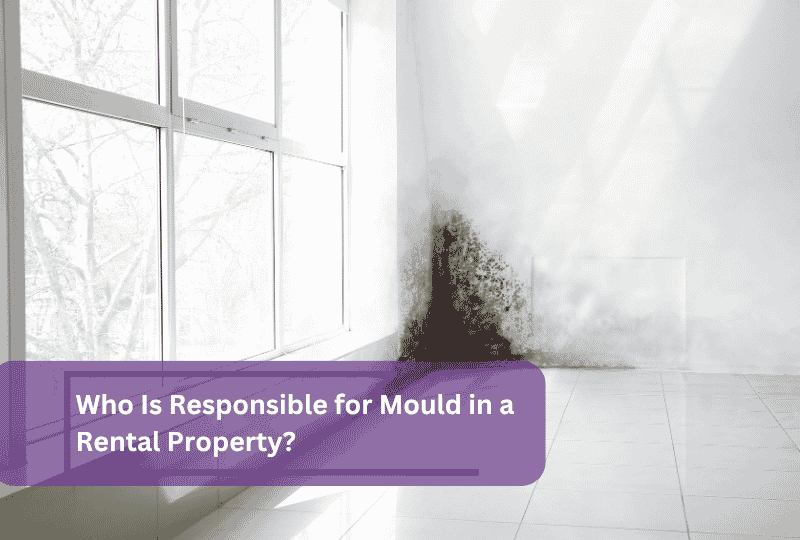
Mould is one of the most reported maintenance issues across the private rented sector in the UK. According to the Scottish House Condition Survey, condensation and dampness affect a meaningful proportion of rented homes each year, and Scotland’s wet climate makes the problem more persistent than in most other parts of the UK.
For landlords, one of the most common questions is who is responsible when mould appears in a rental property. In most cases, landlords are responsible for addressing mould issues, but responsibility depends on the cause of the mould, the condition of the property, and whether either party has failed in their legal obligations.
In this guide, you will learn what causes mould in rental properties, where legal responsibility lies under Scottish law, what landlords must do when mould is reported, and how to prevent mould problems before they arise.
What Is Mould and What Causes It in Rental Properties?
Mould is a type of fungus that grows in damp, poorly ventilated spaces. It spreads through microscopic spores that exist naturally in the air. When those spores settle on a damp surface, they grow and spread rapidly.
In rental properties, mould most commonly appears as black, green, or white spots in bathrooms, kitchens, on window frames, in corners of your property, and behind furniture pushed against cold external walls. Mould can cause property damage and can pose a serious health risk, such as respiratory problems, worsening asthma, and allergic reactions.
Mould does not appear without a reason. The most common causes of mould in rental properties are condensation, penetrating damp, rising damp, plumbing leaks, and high humidity. As a landlord, identifying which one applies to your property is the essential first step before responding to any report or considering a deposit deduction.
Who is Responsible for Mould in a Rental Property: Landlord or Tenant?
In general, landlords are responsible for mould in a rental property when it results from a structural defect, a maintenance failure, or an inadequate system within the building. That said, responsibility is not always one-sided. Tenants have corresponding obligations under the standard terms of their tenancy agreement, and in some cases, those duties overlap.
Under Scottish law, the Private Residential Tenancy framework and the Repairing Standard set clear legal expectations for landlords. Identifying who is responsible in any given situation requires a clear assessment of cause, condition, and the conduct of both parties.
When is a Landlord Responsible for Mould in a Rental Property?
The landlord is responsible for mould that results from a defect in the structure, fabric, or system of the property. This covers the majority of serious mould cases in private rented homes. You cannot redirect responsibility to tenants simply because mould is present; you need to prove that the cause is linked to tenant behaviour, not a maintenance failure.
Some of the most common situations where landlords are responsible for mould in a rental property are as follows:
Structural Defects
When mould develops due to cracked render, failed roof flashing, damaged pointing, or a defective damp-proof course, the landlord is responsible for mould in a rental property. These are structural defects that tenants have no ability to repair and no obligation to prevent. Under the repair standard, you must keep the properties structurally sound, windproof, and watertight.
Failing to address structural defects that lead to mould gives tenants grounds to refer the matter to the First-tier Tribunal for Scotland (Housing and Property Chamber), which can issue a Repairing Standard Enforcement Order requiring the work to be completed.
Inadequate Ventilation Systems
A property without functioning extraction fans, trickle vents, or adequate air circulation creates conditions for persistent mould, regardless of how a tenant behaves. If you fail to install or maintain adequate ventilation, the resulting mould is your responsibility.
Building regulations require appropriate ventilation in habitable spaces, and landlords cannot blame tenants for mould that forms on a property that lacks sufficient ventilation from the outset.
Plumbing and Water Leaks
Any mould caused by a plumbing defect that a landlord was aware of, or reasonably should have been aware of, is the landlord’s responsibility. This includes pipes within walls, failed seals in wet rooms, and roof or gutter faults that allow water ingress.
Where a tenant has reported a plumbing issue, and you failed to act promptly, then you have to carry the full responsibility for any mould damage that follows.
When is a Tenant Responsible for Mould in a Rental Property?
Tenant responsibility usually arises when mould is caused by lifestyle factors, neglect, or actions that increase moisture levels within the property. Unlike structural defects, this type of mould is preventable through reasonable day-to-day behaviour.
Some of the most common situations where a tenant is responsible for mould in a rental property are as follows:
Failing to Ventilate the Property
When a property has functioning extraction fans, trickle vents, and opening windows, but a tenant consistently fails to use them, the condensation mould that results is largely the tenant’s responsibility. Running bathroom extraction and opening kitchen windows while cooking are basic and reasonable expectations.
A landlord cannot be held responsible for mould that grows directly from poor ventilation habits when the means to ventilate were available and in working order.
Trapping MoistureTrapping Moisture
Pushing large furniture firmly against cold external walls blocks airflow and traps moisture between surfaces. This creates ideal conditions for mould growth that a landlord cannot detect during routine inspections.
Similarly, regularly drying large amounts of laundry on indoor airers without ventilating significantly raises humidity levels. When mould forms directly from these habits, the tenant’s responsibility is clear
Property Misuse or Neglect
If the tenant is blocking ventilation points, covering air bricks, consistently keeping heating off during cold weather to reduce bills, and failing to report known leaks, all represent a failure of the tenant’s duty of care toward the property.
Furthermore, the tenant is responsible if they have intentionally damaged the property. In this case, landlords can recover from the tenant’s deposit or take legal action for critical damage.
What Should Tenants Do If They Discover Mould?
Tenants who find mould should act immediately. A prompt, well-documented response protects both their health and their legal position. Delayed reporting or failure to follow the correct process weakens a tenant’s claim and can shift some responsibility back onto them. The steps a tenant should take when they discover mould are as follows:
- Document the problem: Take clear, date-stamped photographs of the mould and any related damp patches. Identify the affected rooms, estimate the area size, and assess any damage to your belongings.
- Notify landlord in writing: Report the mould formally by email or through the agent’s official repair channel to the landlord. Written reports create a time-stamped record that verbal reports cannot provide. If a dispute arises later, this record is critical evidence.
- Keep records of communication: The tenant should retain every email, message, and written response from the landlord or letting agent. If the landlord fails to respond or take action within a reasonable timeframe, the tenant has grounds to escalate the complaint.
What Should Landlords Do When Mould Is Reported?
When a tenant reports mould, your response determines both your legal standing and the scale of the eventual repair bill. Acting quickly and following the correct process not only protects the property but also demonstrates compliance with your legal obligations under the Repairing Standard. The key steps you should take when mould is reported in a rental property are as follows:
- Investigate promptly: Acknowledge the report quickly and arrange to inspect the property within a reasonable timeframe. In Scotland, landlords have a legal obligation to respond to disrepair under the Repairing Standard. Ignoring a report has no legal defence.
- Identify the root cause: Do not treat surface mould with a cleaning product and consider the matter resolved. Surface treatment without addressing the main cause means mould returns within months or even weeks. Identify the root cause before starting any repairs
- Arrange a professional inspection: When the cause is unclear or the affected area is significant, arrange a damp survey from a qualified specialist. A professional property inspection report gives objective evidence of the cause and an appropriate plan to repair it, and protects you if the matter escalates.
- Repair underlying defects: Once the cause is determined, repair properly using qualified personnel. Ensure to retain all invoices, completion certificates, and contractor records.
- Maintain communication: Ensure to keep the tenant informed throughout. Tell them what work is planned, who is carrying it out, and when it will be completed. Poor communication can escalate disputes that proper communication prevents.
- Keep inspection records: Record every inspection, repair, and piece of correspondence related to the mould. A complete paper trail shows compliance with your legal duties and protects you from wrongful claims.
A mould report handled well protects the property, the tenancy, and your legal position.
You may also like to read: How to Handle Tenant Complaints Effectively: Guide for Landlords
How to Prevent Mould in a Rental Property
Preventing mould is usually far easier and less expensive than dealing with a serious damp or mould problem later. By taking proactive steps before and during a tenancy, landlords can reduce the risk of property damage, tenant complaints, and costly repairs. Some of the most effective steps you can take to prevent mould in a rental property are the following:
- Ensure adequate ventilation throughout the property by installing and maintaining extractor fans in kitchens and bathrooms, and checking that trickle vents are present, functional, and unobstructed.
- Carry out regular property inspections to identify signs of damp or condensation early and address any maintenance issues before they develop into mould problems.
- Improve insulation where necessary by maintaining effective loft and cavity wall insulation and considering double glazing to reduce cold surfaces where condensation can form.
- Provide tenants with clear guidance on ventilation and moisture control, including practical mould prevention advice in welcome packs or move-in information.
- Use moisture-resistant materials in high-risk areas such as kitchens and bathrooms, including anti-mould grout, moisture-resistant boards, and suitable sealants.
- Respond quickly to leaks and water ingress by repairing plumbing leaks, damaged gutters, and roof defects promptly and investigating the root cause of recurring damp issues.
Landlords who treat prevention as part of their routine management rarely face the cost of a serious mould problem.
Conclusion
Mould in a rental property is never just a surface issue. It creates genuine health risks, causes lasting damage, and leads to legal disputes when either party fails to act correctly. In most cases, the landlord is responsible for mould in a rental property, particularly where the cause is structural or where maintenance has been left unaddressed. Tenants carry responsibilities too, but the starting point for any landlord should be their own obligations under the Repairing Standard.
Meeting those obligations does not need to be complicated. If you respond to reports quickly, find the root cause before treating the surface, and keep a clear record of everything you do, you are already ahead of most landlords. Those habits are what protect the property, the tenancy, and your legal position.
If you are a landlord in Dundee or the surrounding areas and are dealing with mould in your rental property or want to prevent it from becoming a future issue, professional support can make all the difference. At Westport Property, we have over 13 years of experience managing rental properties. Our team can help you identify the causes of mould, arrange inspections, assist with property maintenance, and implement preventative measures to protect both your property and your tenants.
Have A Question or Need Some Help?
Whether you're searching for the perfect rental property or a landlord wanting advice on letting, we're here to assist. Feel free to call our office or send us an email, and we'll be happy to help you with any queries you may have.
Frequently Asked Questions
Can a landlord deduct a deposit for mould?
Yes, but only if the landlord can demonstrate that the mould was caused by the tenant's behaviour. Common examples include failing to heat or ventilate the property, blocking extractor vents, or consistently drying laundry indoors without opening windows. A landlord cannot make a deduction where the mould resulted from a structural defect, a plumbing fault, or inadequate ventilation installed in the property.
Is mould considered normal wear and tear?
In most cases, no. Wear and tear refers to the natural deterioration of a property through ordinary use over time. Mould caused by a tenant failing to ventilate the property, trapping moisture, or neglecting to report a leak is treated as damage, not deterioration.
Can tenants refuse to pay rent because of mould?
No. Withholding rent over mould in a rental property is a breach of the tenancy agreement, regardless of how serious the issue is. The correct route is to report the mould in writing, give the landlord a reasonable period to investigate and carry out repairs, and escalate through the proper legal channels if no action is taken.
Can mould make a property unfit to live in?
Yes. Extensive mould that affects multiple rooms or poses a serious health risk to tenants is treated as a hazard rather than a routine maintenance issue. In Scotland, severe mould is likely to breach the Repairing Standard and fall below the Tolerable Standard, making the property legally unfit for habitation. Landlords who fail to act on serious mould reports face enforcement action through the First-tier Tribunal for Scotland (Housing and Property Chamber).
 Find a Property Sale/Rent
  Property Management
  Tenant Background Screening
  Rent Collection
  Property Maintainance
  Property Inspection
  Property Advertising
  Portfolio Management For Landlords
  Investment & Asset Management